Hand-made cards

顯示具有 社會關懷 標籤的文章。 顯示所有文章

2013年8月16日 星期五

Loving Nature

為了預備教會培訓班課程──舊約釋經與今日社會──第一 (已橫跨第二課) 的內容,於是輯錄了一些由 James Nash所著的 Loving Nature: Ecological Integrity and Christian Responsibility 一些內容。現在先賭為快:

"Main supports for Christian ecological ethics and action:
1.    Christian understandings of God as Creator, Spirit, and Redeemer imply that the whole creation and all creatures are valued and loved by God…  All life forms have intrinsic value, and are to be treated with appropriate care and concern
2.    The Christian faith dedivinizes but also sacralizes nature… But all creatures and things are to be treated as sacred subjects and objects, used reverently and respectfully.
3.    The Christian faith is an affirmation of ecological relationality… Humans are interrelated parts and products of nature. Moral responsibilities for the necessary use of the biophysical world are shaped and limited by these relationships.
4.    … we also have moral responsibilities to use these resources frugally, fairly, and prudently in respect for our coevolving kin.
5.    The biophysical world has an interim goodness in experience and an ultimate goodness in hope.
6.    The Christian faith counsels human humility in the light of ultimate mystery, natural limitations, and biological connections.
7.    Human dominion … a judgment on such exploitation. … dominion is responsible representation, reflecting the divine love.
8.    All forms of ecological negligence or undue harm –are expressions of sin.
9.    Christian can perceive God as exercising ecological judgment against ecological sins to call the human community to ecological repentance.
10.  Ecological responsibility is an inherent part of the ministry of the church …. The church, therefore, should be a model of ecological ministries to the world.
11. The Christian faith provides solid supports for all the ecological virtues –sustainability, adaptability, relationality, frugality, equity, solidarity, biodiversity, humility, and sufficiency." (137-138)

Political Directions:
"There can be no ecological integrity apart from social peace and justice!
There can be no social justice without ecological justice!
There can be no peace among nations in the absence of peace with nature!" (218)

"(S)ince economic deprivation is a major cause and effect of ecological degradation, ecological problems cannot be resolved unless economic maldistribution is remedied. Otherwise, the people of poor nations are forced to exploit their natural resources beyond the limits of sustainability. Economic equity among nations is as much an issue of ecological ethics as social ethics. Equally, population control is a matter of both social and ecological justice. Environmentalists, therefore, should also be spirited advocates of economic justice.
Political peace also contributes to ecological integrity, just as war has the opposite effect. War and the preparations for war pose serious threats to ecological health, largely because of the massive consumption of resources and energy, the production of toxic and radioactive wastes, and the destruction of ecosystems through the testing and use of weaponry." (219)

"In the final analysis, the integrations of peace, justice, and ecological concerns is simply an effort to match ethically and politically the integration that already exists ecologically and socially." (221)

"The best we can do is hustle and hope. We can strive to realize whatever semblances of ecological integrity are maximally possible now. We can also struggle in the confidence that with each step forward, God the Politician and the Lover of life is ever creating new possibilities to realize the integrity of God’s—and our—beloved habitat." (221)

2013年8月1日 星期四

林老師,“What the Fxxk!!!”


這幾天,太多不同的傳媒、文章評論、關於林老師「爆粗事件」。因一段報導,引來多方不同的譴責,包括警方,好似已判了當事人刑。結果,林老師及其學校要公開道歉 (雖然我認為是學校壓力大於一切)

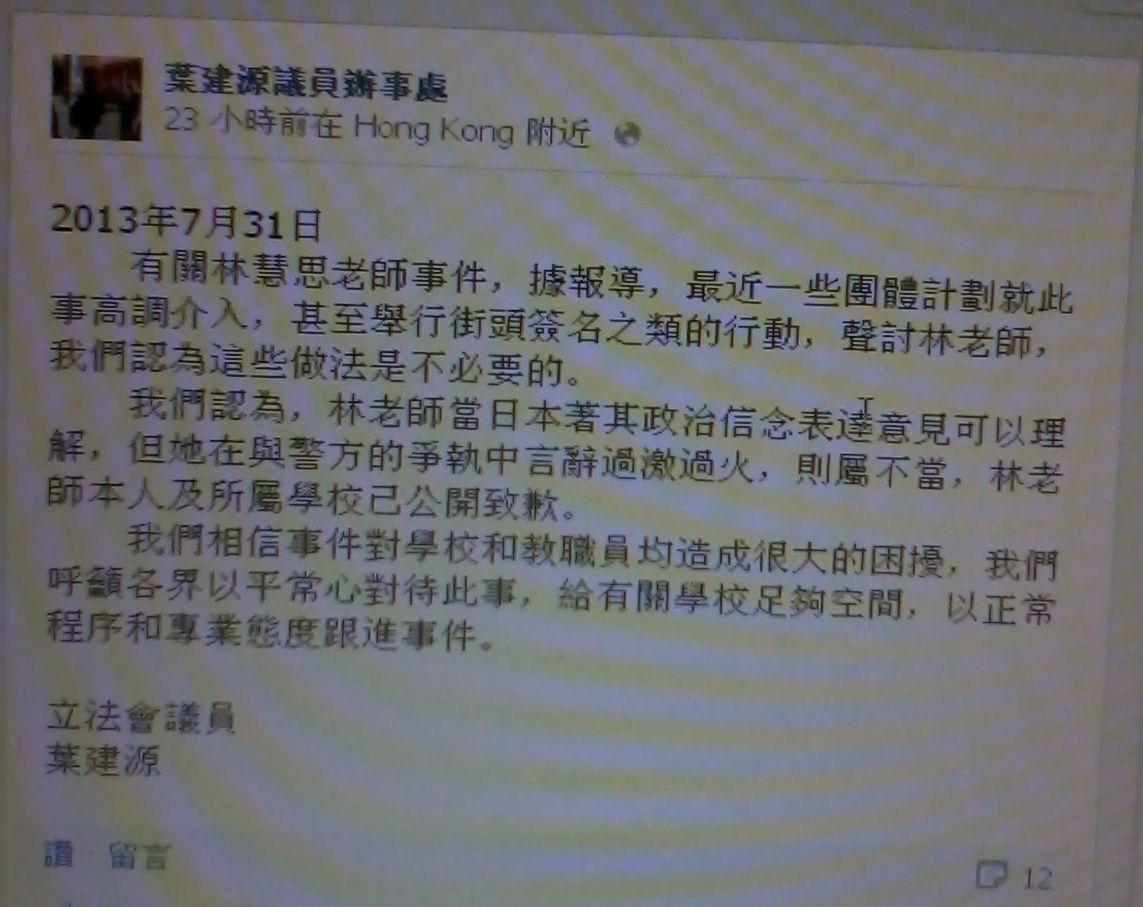
以下是尊貴的立法局教育界議員於 fb的意見:


從他的意見,我覺得有2點可討論一下。一是他形容林老師是因其「政治信念」而爆粗,言辭過火 (據聞林老師是社民連成員,而葉議員,是教協總幹事。教協?我都不知是否可則其為白鴿黨支部!利申,本人對白鴿黨無甚好感,但會去教協買平貨!)。無端端的把事情穿上一件政治外衣。二就是他沒有說的,就是這事件誰是誰非?怎樣判斷?還是他沒有了解整件事?基督徒求的真,其實是怎樣的真?如果要他教通識,這會是怎樣的作答?
事件

我想,太多人只從youtube search 到這片〈香港警察忍功一流。之後就是圍攻、保護、平反、聲討… 漸漸的,成為了一種暴力。我們可以以什麼方式去了解事情?

這讓我想起之前修讀過的其一課程:Popular Culture, Media and Christianity 。課程中有一本參考書名為 Media Violence and Christian Ethics,由Jolyon Mitchell所著。內容就如書名所述,包括對於媒體它自身及所產生的暴力,基督徒怎對應?下文會有quotations。但課程所學的,是對媒體增加丁點認識。媒體所表達的,首先,有否真?如果是真,又有多少是真?又或者有什麼被隱瞞?從什麼角度去著墨?是多元還是單一的向度?報道者/ 機構的背景或 hidden agenda 又是什麼?報道經過多少的 editing?作為基督徒,我們的看的,我們明白嗎?

說回林老師事件,其實是可從另一角度──大紀元的錄像──看到事情的起始、經過、發展等等,都可看到。雖然,這version 都是經剪接,但起碼較為完整。香港很多市民已被超級娛樂化的報道馴化了。當然,這是雙向的。沒有趣味的新聞已變得沒有價值。

而事件的重點,好似落在「爆粗」上。但這卻突顯了在無力、束手無策、無法溝通,甚至是人多對人少又加上權力的威脅下,人可以做什麼?之前的就是一件不將義的事件發生了。林老師已是非常激動。太多旁人卻是「靜觀其變」或「享受」不同人的反應。發聲,是多此一舉還是見義勇為?作為老師,哪一樣更正確?不過,投其所好卻是社會高度讚揚的。作為老師,林老師是否恰如其分?老實說,我不懂。但她曾是個受表揚的老師。

粗言穢語

至於粗口,不知何時,已變成道德判斷了。社會的去粗俗化,其實更是恐懼粗俗的表現。經過聽到家長或教育人員、甚至教會的高層常說說粗言穢語是錯,是低下階層/ 沒有文化/ 沒受教育的人才說 (可能還包括「壞人」!)。為什麼?是歧視低下階層/ 沒有文化/ 沒受教育的人嗎?反對粗言穢語的人,其實有多了解它?從文化研究、社會學、人類學、語言學都有不同的研究。某程度它是文化承傳的載體。何況在不同 context 說的粗言穢語效果又不同。再說多一點,究竟粗口是為說而說?是 second nature?還是說的是指涉 (signify) 其他事情?說話的背後還有什麼目的、含意?

說粗言與否,可能和修養有關,但和道德無關。因此,在批判前,是需要更多了解它是什麼。華人基督教的道德至上,形成了不少矯枉過正的行動。在教會內,只聽到老輩、傳道牧者叫年青人不要說粗口。很多時沒有解釋,只有硬啃;可能加多一兩句「不合聖徒體統」、沒有「基督樣式」「失見證」等。可能是;但恐怕只是組過瀘的人,而不是一個真實的人。當一個人活著是基督,但卻失去了真我的時候,這還否一個整全之人?當然,一個人為了更向「善」的緣故不說粗口,是可敬的。但可敬的事,若成為 norm,就會出亂子。
問題時間:你估耶穌有冇講過粗口/ 俗語?聖經又有冇出現過粗言穢語?西方人真抵死,一句 holy shit 已勝千言萬語。

有看電影的朋友,我想問多一句,為什麼外語片出現粗言穢語就可以是IIB級電影,而廣東話電影出現粗口就只能列為三級?是文化歧視?語言歧視?更有趣是,如果一個有「修養」的人於演講、表演是說粗口,竟會惹來哄堂大笑。是什麼道理?是笑點太低還是香港人太抑壓?

其實,報道或譴責林老師這件事,是人miss the point、蓄意轉移視線、還是要站在道德高地?耐人尋味。

暴力

如果林老師說的話形成暴力,是那麼大迴響的話,那麼陳局長的「行公義、好憐憫、存謙卑的心,與神同行。」就更暴力了;更加是 abusing God!如果林老師是以言教壞人,陳局長,甚至是整個社會就更加是言教及身教的教壞人!更加是教壞全香港人。Anyway,我想我以下的話,總比陳局長更教壞人 (按彭志銘的分類,「小」「狗」「懶」「擦」「鞋」才是正式的粗口,其餘只是俗語)
陳局長,__ 你!你個 __ 街,正 __ 人,__ __ 到,講大話呃 __ 晒香港人!正一「政、商、教」三位一體o __。不 __ 知所謂!正一冚家 __ 。淨識 __ up,冇 __ 用!             (是否為大家出了一啖氣?)

甜品

最後,以下是Media Violence and Christian Ethics 的一些節錄及思想,慢慢欣賞:

“Most media, offering fictional or non-fictional portrayals of the world, are drama to the game, the film or the news story.” (3)

“There are numerous forms of media violence, which audiences in different context learn to distinguish, to endure or to derive pleasure and entertainment from.” (3)

“… one of the most commonly cited definitions for the term ‘media violence’ as meaning: ‘the overt expression of physical force (with or without a weapon) against self or other, compelling action against one’s will on pain of being hurt or killed or actually hurting or killing’.[1] This definition has been extended to include verbal aggression and violence against inanimate objects and animals.” (8-9)

“Reframing … is not a form of escapism nor an activity devoid of moral implications. It is a way of reconsidering the ‘reality’ which a multiplicity of news outlets present on a daily and hourly basis … Reframing therefore can assist viewers in reconsidering the original images or stories in a new light, liberating them so that they can perform peaceful practices that may help counter seemingly inevitable spirals of violence. As such, reframing is a form of ‘moral reflection’, combining theoretical analysis and practical wisdom.” (64)

作者認為當 基督徒作影像時,應成為 “active audiences”,當中包括:
1. view with discernment (151),
2. it can become a direct stimulus for action (153)

另外,”viewers can turn from focusing on themselves to focusing on their neighbours and on God.” (155)
(這是買書的好處,可隨時作參考。)


以上一些觀點是參考了《天外有天》:http://www.youtube.com/watch?v=Zd3S2AONz3g


[1] Geroge Gerbner et al., ‘The Mainstreaming of America: violence Profile No 11’, Journal of Communication 28.3 (1978), 176-207.’

2013年6月1日 星期六

恩典的社會行動


『無疑地,福音主義在這觀念是對恩典的基本回應 (按:對別人作見證而將祝福帶給人) 但限制我們的責任去傳福音不單低估了上主復和工作的領域,亦會錯失聖經對更廣闊恩典的呼召這事實。』

Social Actions of Grace:
(Certainly, evangelism is in this sense[1] a basic response to grace... But to limit our obligation to evangelism is not only to underestimate the scope of God’s work of reconciliation but also to miss the fact that Scripture calls for a broader grace.)
Stephen Charles Mott, Biblical Ethics and Social Change (2nd edition) (Oxford, 2011), 26.


[1] It means the “testimony through evangelism, so that others may share our blessing.”

2012年6月4日 星期一

特別的日子


今天是特別的日子。

因為今天是六月四日,作為中國民族的一份子,一個無論如何都不可忘記的日子。
因此今天和一個幾年沒「正式」傾偈的朋友飯敍。交談關於工作、關於信仰、關於音樂、關於挽負、關於家庭……的事情。

因為在天后地鐵站的 escalator ,撞見一個早於 89年已相識的同學。時間走得很快,但在那一刻,一個招呼,就像回到小時候……

到了維園,心情沉重了。23年的時光,忽然過得很慢,很像有些東西沒有改變過、有些東西只改變少許。太多 flash back了。雖然當時我還小 (小五),學校在六月五日及往後的日子,張貼了很多有關民運的資料。不知道小學如今是否仍然開放的展示、教導、討論?如果沒有的話,it’s a shame

我相信今天很多基督徒,為了亡魂、為了平反、為了公允公義、甚至是為了中國的將來而走出來,到維園悼念那群為了自由、為了理想、為了國家未而失去性命的來學生;亦記念為因延續這群學生信念而受逼害的親人。原因是什麼?我相信,最基本的元素就是公義。我的問題是,為什麼基督徒會為這「公義」行出來,但對社會其他的不公義又有何反應?再縮小一點,如 Hauerwas 的理念,可否在教會作一個示範而讓其他人看見?教會/ 基督信仰群體要是沒有公義,只有民粹、只有靈意化的表達、只有宗教用語,是否基督徒應做的事情?教會是否更要表達對不公義狀況的態度?

社會的不公義太多了,更沒有辦法製造和平。是和平,不是和諧。不公義在生活的每一角,如工作環境、生活 (衣、食、行,及住!)、政策等。從不公義制度滾出來的雪球是一發不可收拾。做了不該做的事,和沒有做應做的事,都助長了雪球的增大。

一年一次對不公義的不滿是不足夠的。不滿要轉化為思考,思考後配合行動,更是持續的行動。面對各種 monopoly、各種 hegemony、以大欺小、不誠實的得益、欺騙人民、壓制人民等等,可以坐視不理嗎?

行公義,原本是要「行」出來的!

2011年7月29日 星期五

問候「所長伯伯」!

上星期書展,主要行基督教書坊及突破counter,只有少量收穫 (2個月已在網上買了/ 訂了多本書籍,再買唔掂!),最開心的是買了以下兩本書 《聖詩學》及《小香港人》

《小香港人》是對香港一些被遺忘的小人物的描繪 (對不愛看文字的朋友是一個好消息,因為書中的 main ingredient 是圖畫)。小人物如家務助理、街邊賣菜亞婆、清楚工人等等等等 在大部份香港人生活中不斷穿插的人,卻偏偏是香港人忽略,或閉上關心的人。

在看完《小香港人》後的不知第幾天,和老婆探完了在醫院的外父,到了鑽石山某商場吃晚飯。在等位時,我上了廁所。進去時,看見替我們服務、專職清理現場的「所長伯伯」是一個滿頭白髮的老翁。看上是一早已過了退休年齡那種。清理的動作明顯不快,總之,他有他的 tempo。當我如廁時,已有衝動去問候他,一邊方便、一邊心郁郁的。到了洗手時,我做了一個一世人第一次做的事情,問了「所長伯伯」一句「食o左飯未呀?」而他像嚇了一跳的回答「食o左」,而我就笑笑的離開了。

不知道伯伯之後有什麼感覺,但我覺得這是一件值得分享的事。對很多人來說,可能已試過這些問候 (如對看更、服務員等的寒喧,我也會),但對我來說,我在嘗試踏出自己的 “comfort zone”,去關心一些身邊被忽略的人 真的像被 isolated 的人。

最後,《小香港人》是一本非常非常非常值得購買的書,久不久看看,相信會對生活/ 生命的看法有一點點的衝擊。

http://www.breakthrough.org.hk/chi/hkbf/book.html